路徑
人總在空間中移動,賦予這個移動意圖與想像就產生了「路徑」。「路徑」在乎的是人透過身體在空間中的感受,人在建築中的存在感。「路徑」關乎建築的生與死!柯比意曾說:「一個建築作品是活著的或是死的,端看漫遊和穿越其中的經歷。」
我們對於建築空間中路徑意義的體會,很大一部份是從園林和旅行而來。路徑的計畫或許可以很自由而圖像,但身體在空間中的體驗卻是現象的。人的移動是在時間中進行,有了時間就有了序列,建築就有了不一樣的內涵。春夏秋冬四季,白天黑夜晨昏,不同的時序,不同的光影和風,時時喚起感知體驗空間。
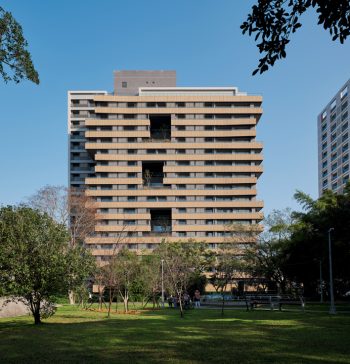
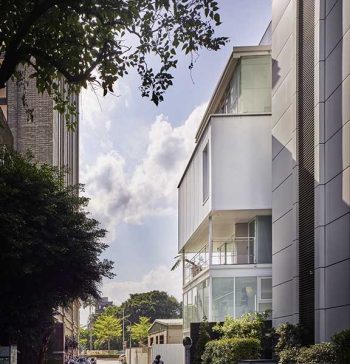
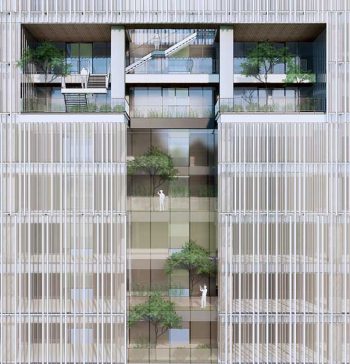
本展區展出:琢豐接待中心 / 臺北醫學大學宿舍 / 文山區興隆社會住宅E區 / 酷大師總部大樓 / 桃大建設辦公大樓 / 力行國小體育館
Pathways
People are always moving through space; pathways are created when we impart intention and imagination to this motion. Pathways relate to the experience of our bodies in space and our sense of belonging within architecture—and architecture lives or dies by its pathways! Le Corbusier once said that whether a building is alive or dead all depends on your experience as you wander and move through it.
Our understanding of pathways in architectural space largely derives from gardens and travel. Planning a path can be free and pictorial, but our physical experience in space is phenomenal. Human movement takes place in time, and with time comes sequence, which in turn brings a different meaning to architecture. The four seasons, day and night, and morning and evening, all have their unique lights, shadows and breezes. In every moment, time and sequence evoke our perceptions and experiences of space.
This Section Includes: Song Jiang Reception Center / Second Student Dormitory, TMU / Xing Long Public Housing—Site E / Cooler Master Headquarter / Taota Group Office Building / Li Xing Elementary School Gymnasium