
臺北醫學大學宿舍 Second Student Dormitory, TMU

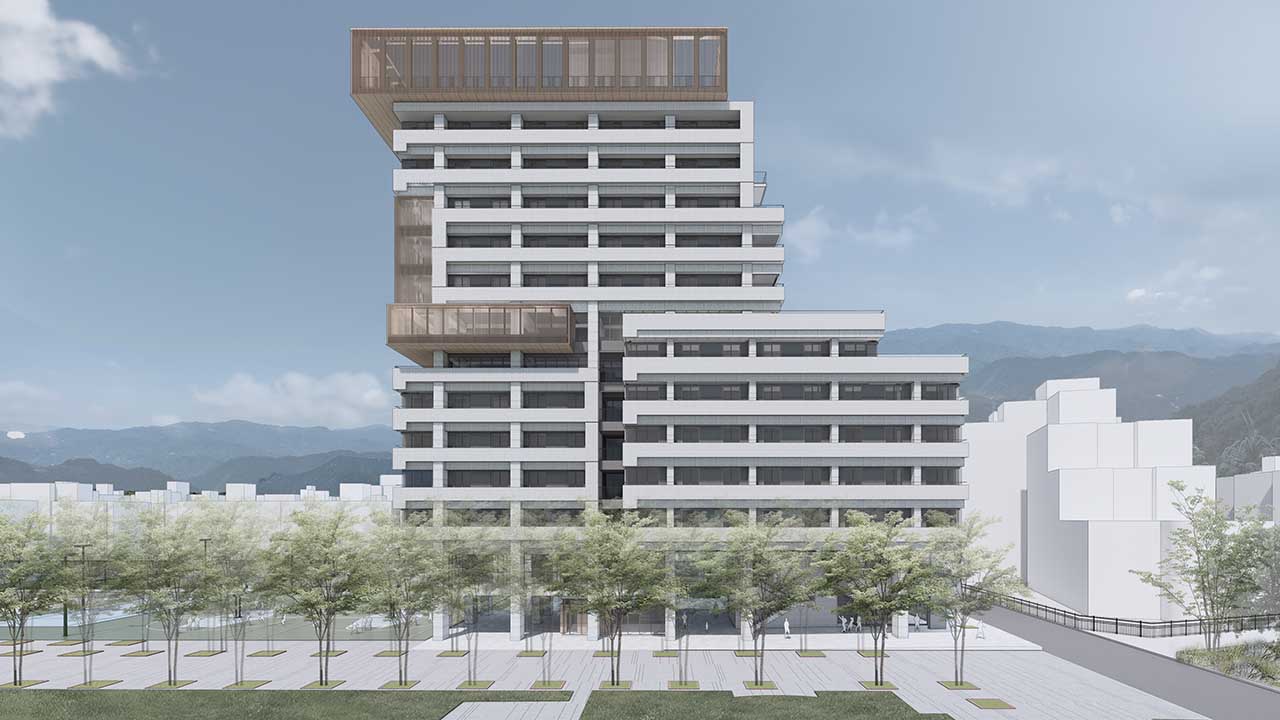
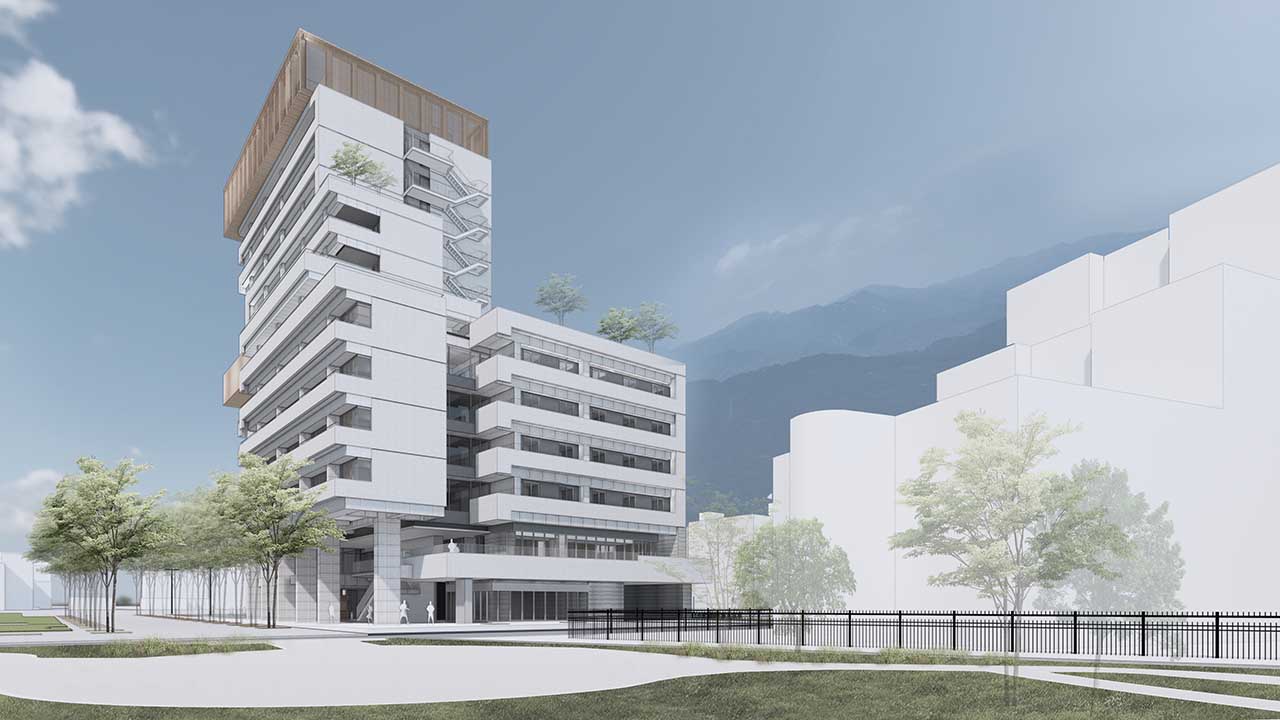
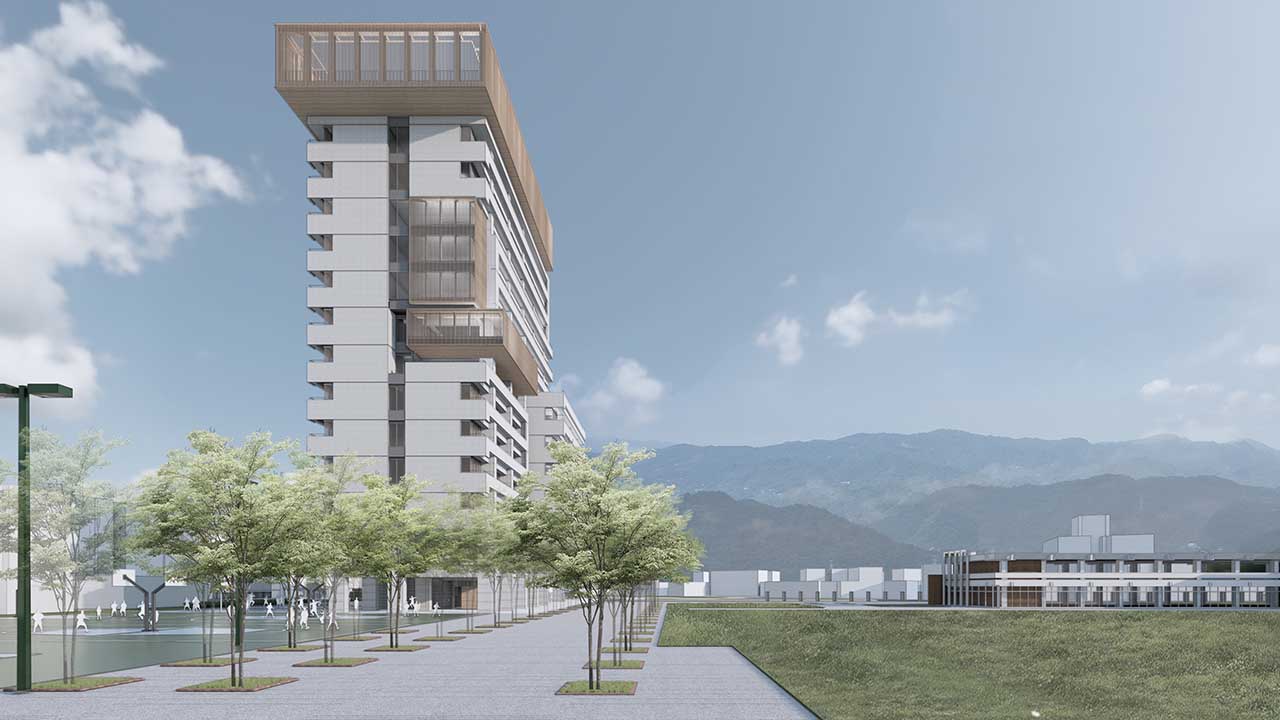
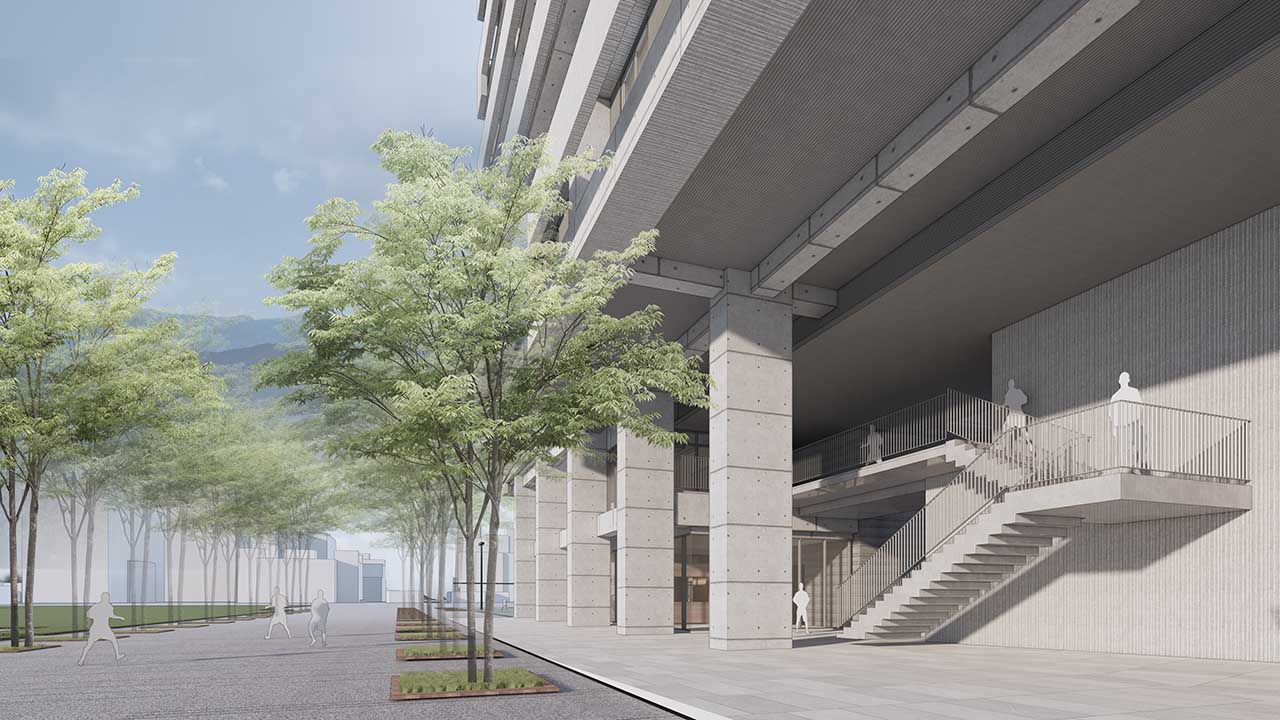
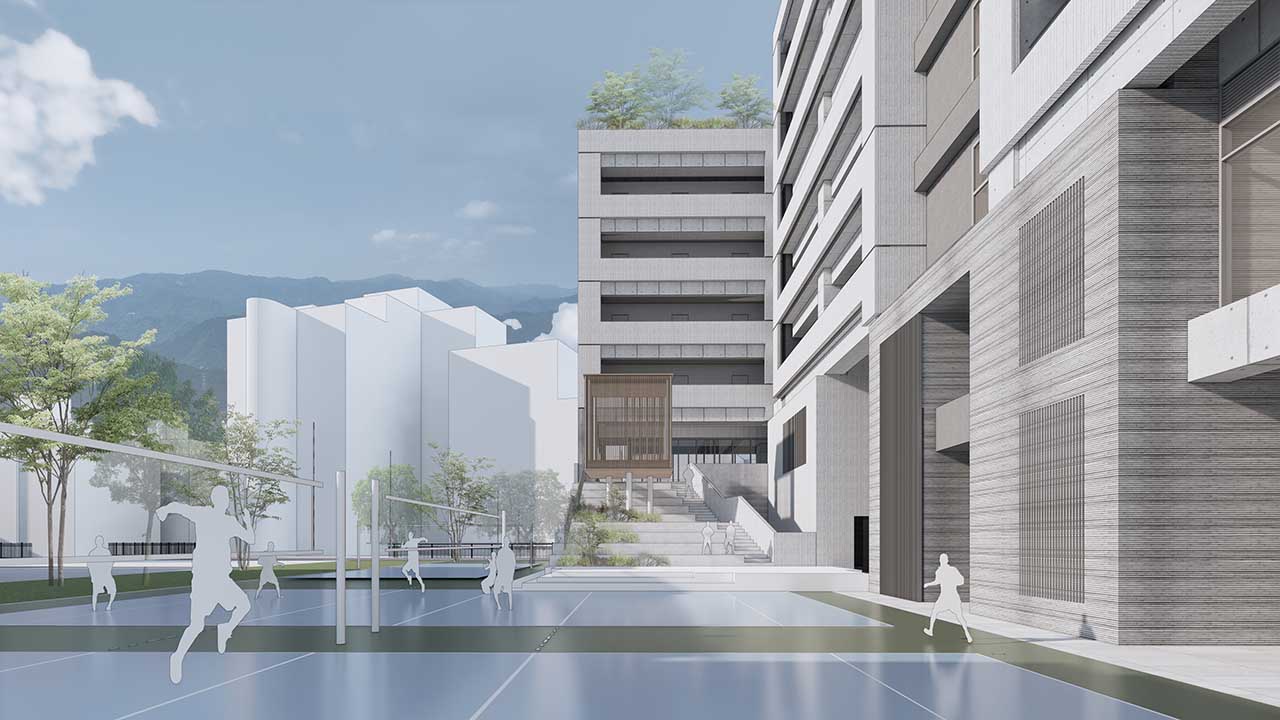
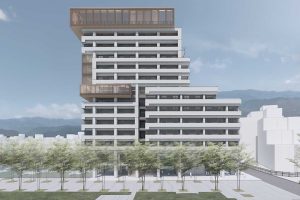
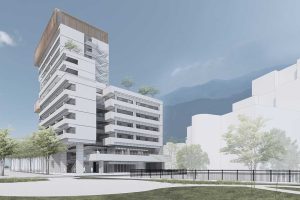
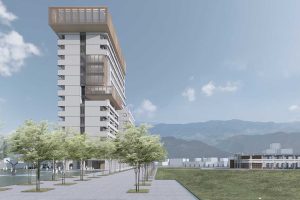
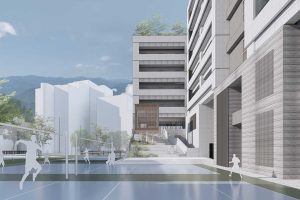
位於臺北醫學大學的最南端,西側連接由姆指山系延伸的黎雙公園,北側面臨深具校園歷史及人文精神的楓林道,西南側與學生活動最是活躍的球場緊鄰。此外,新建的宿舍亦扮演教學區與現有拇山學苑宿舍之連結樞紐。
醫學院學生生活單調且課業極為繁重,透過運動舒緩身心並活躍其精神,是醫學院校園生活有別於其他大學之處,尤其球類運動更是重要。新宿舍頂樓設置球場,讓居住高層樓學生接近球場,是一創舉;宿舍低樓層部分亦規劃多處活動空間,讓新宿舍除居住之外,亦成為校園中一處主要活動場所。
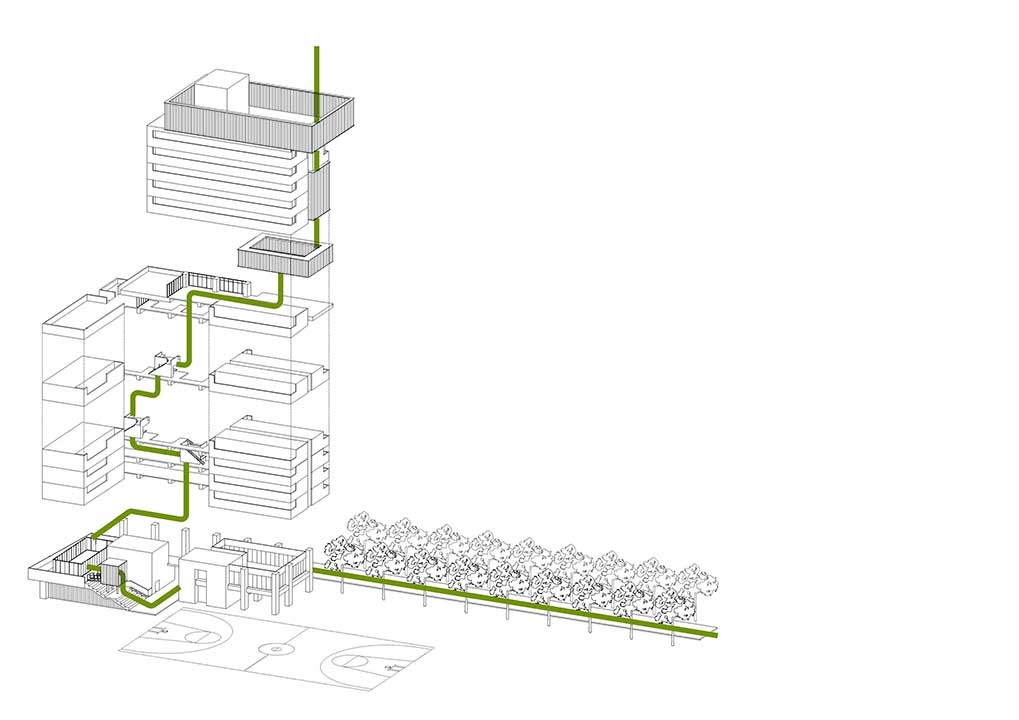
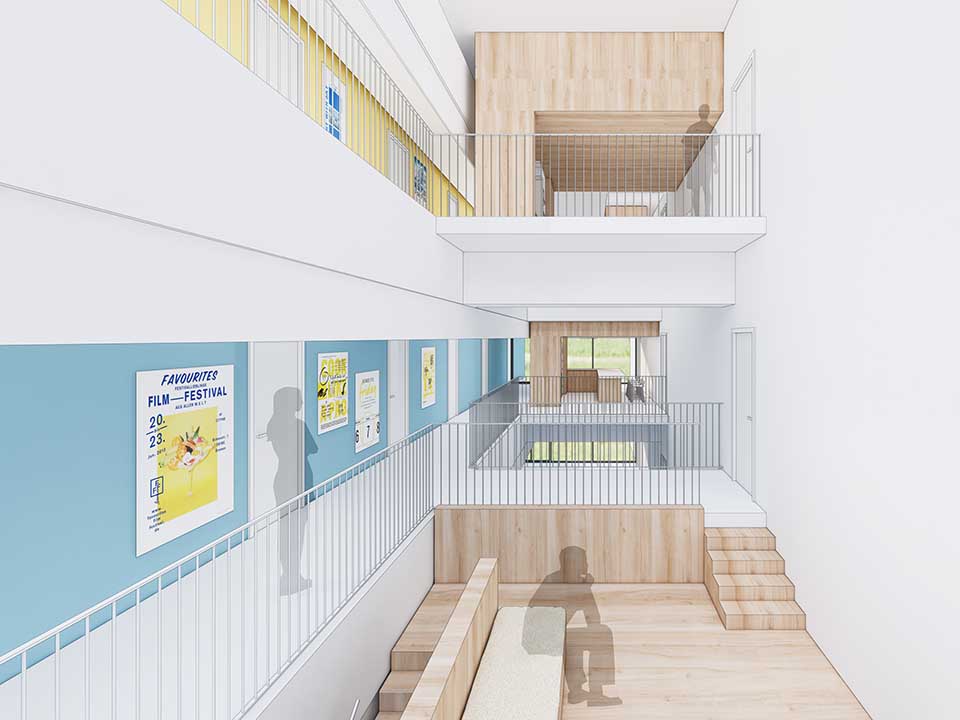
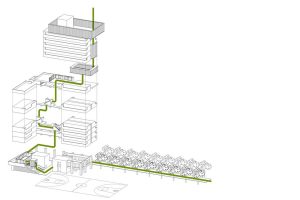
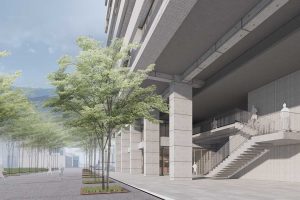
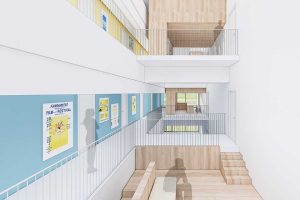
新宿舍設置約一百九十間住房,共三百八十個床位。一條路徑始自地面層,透過楓林道和校園主要活動場所聯繫成一個完整的網絡,讓地面層活動空間成為球場延伸的腹地;並有一座大階梯引領在球場活動的學生親近二樓公共空間。三至七樓住房中央有一長型挑空,挑空中漂浮著四座內有小廚房與茶水吧檯的盒子以及盒子頂部的小平臺,樓梯在這些盒子和平臺中穿梭,往上穿過八樓活動空間,在屋頂花園透過懸挑樓梯與頂樓球場連結。路徑是一項時間的藝術,可在醫學院學生繁忙的生活中緩慢腳步,引發自由移動,誘導彼此之間不經意地接觸與交流,留下美好的校園生活回憶。
***
The dormitory is located at the southernmost part of the Taipei Medical University campus. To the west, it connects with Lishuang Park, which extends from the Thumb Mountain range; to the north, it faces a maple-lined avenue, rich in campus history and cultural spirit; to the southwest, it adjoins the lively sports courts where students are most active. In addition, the new dormitory also serves as a link between the academic area and the existing Mushan dormitories.
Medical students’ lives are often simple, and their academic workload is extremely demanding. Sports provide an important way to relieve both physical and mental stress, which distinguishes medical school life from that of other universities—especially ball games. To enhance student life, we added a truly innovative feature, a basketball court on the top floor, so students living above have convenient access. The lower floors also include multiple activity spaces, making the dormitory not only a place to live but also a central hub for student activities on campus.
The new dormitory provides around 190 units and 380 beds. A continuous pathway begins at the ground level, linking the maple-lined avenue with the campus’s main activity areas to form an integrated network. The ground-floor open spaces serve as an extension of the rooftop court, while a broad staircase invites students coming from the court to move naturally into the shared spaces on the second floor.
From the third to the seventh floors, the housing is arranged around a long central atrium, where four suspended boxes, each containing a small kitchen and tea bar, appear to float in the void. Their roofs become intimate platforms, while staircases weave among them, rising through the eighth-floor activity space and eventually connecting, via a cantilevered stair, to the rooftop garden and basketball court.
The pathway was conceived as an art of time, encouraging busy medical students to slow down, wander freely, and encounter one another in passing. These unplanned interactions enrich campus life and create lasting memories.