
臺北官邸 Stacking House
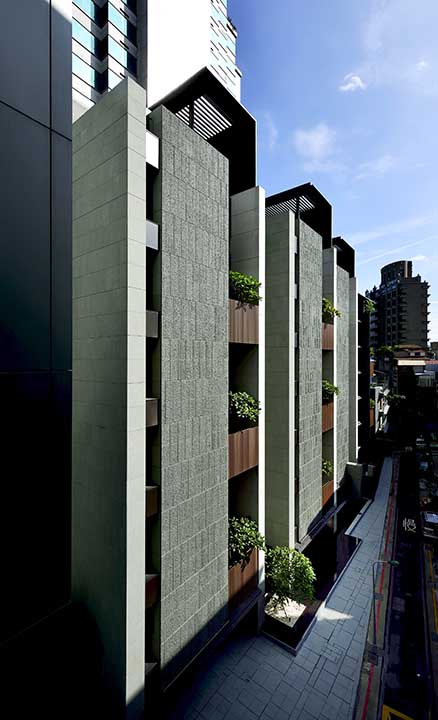
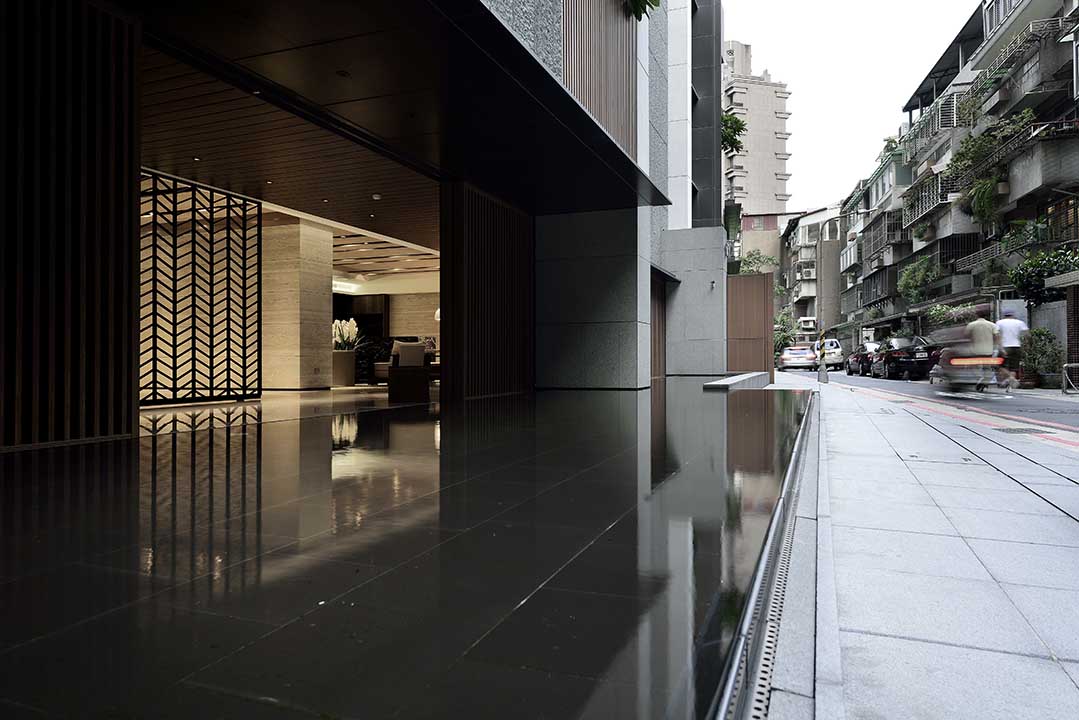
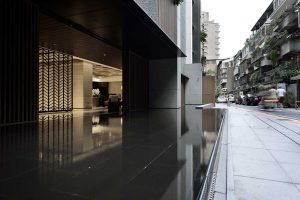
位於杭州南路一段巷內,機關、學校和昔日的官舍羅布,此區域的都市機能代謝得特別緩慢,巷內難得地幾乎沒有商業活動。從忠孝東路的車水馬龍轉進窄巷內,時光倏忽凝結。發展這個住宅設計時,最關鍵的考慮是如何回應這獨特的時光感。巷子為私設道路,寬僅三點八米,汽車駛入絕少,是天然的步行遊戲巷,身在家裡可以感覺到外頭的安靜。在這樣的環境中,圍牆已是多餘。
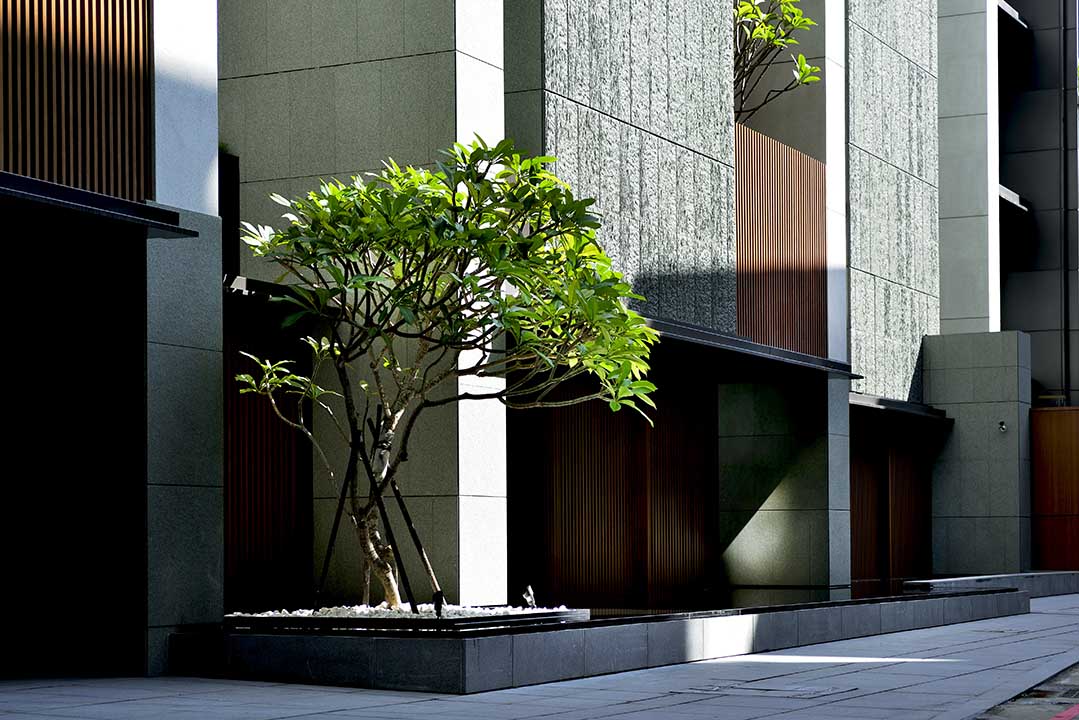
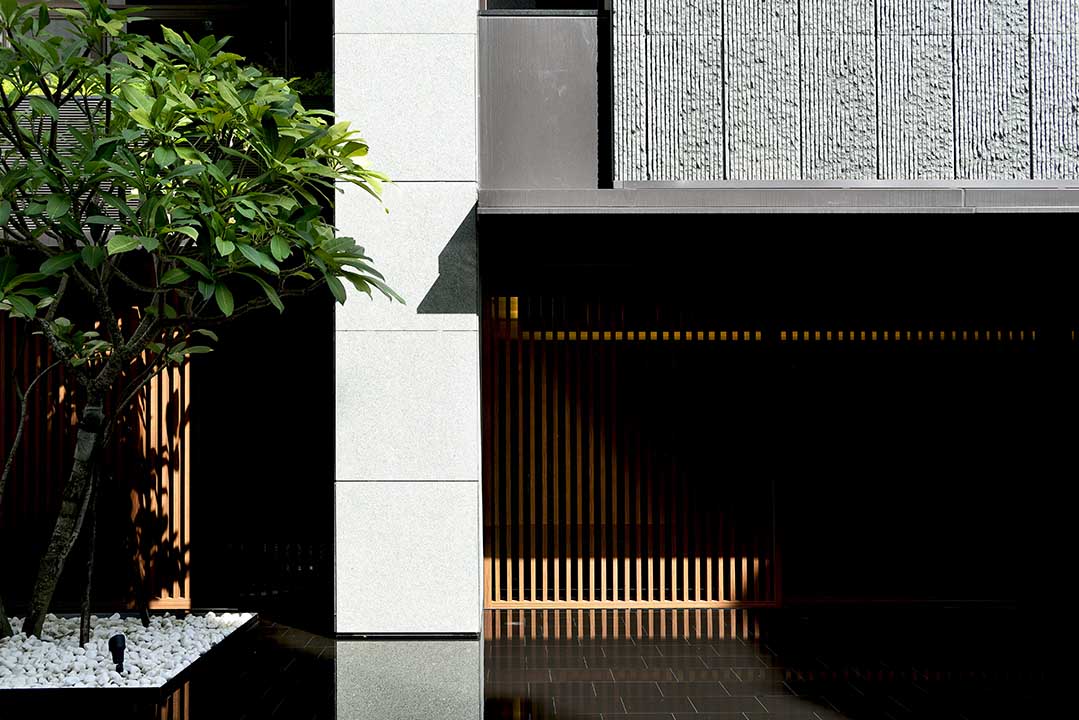
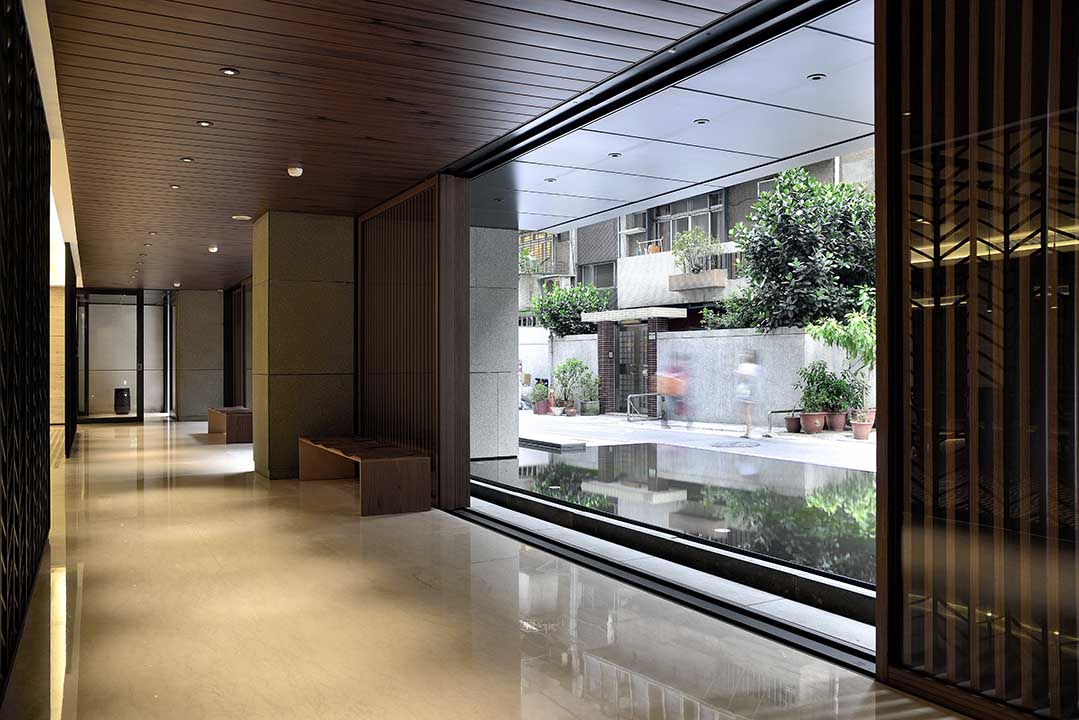
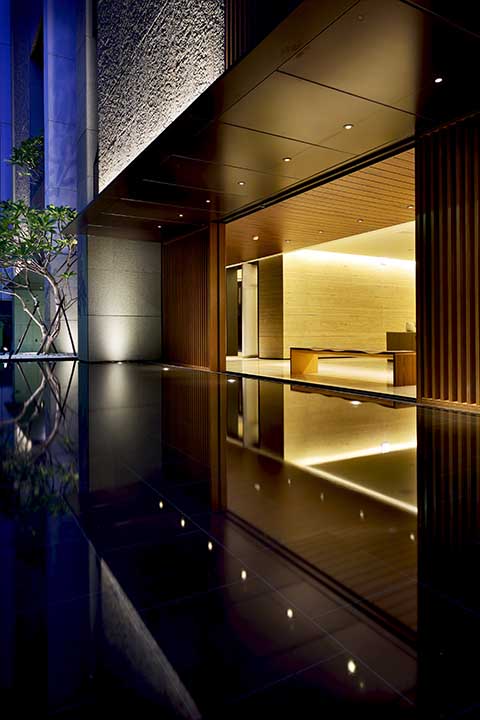
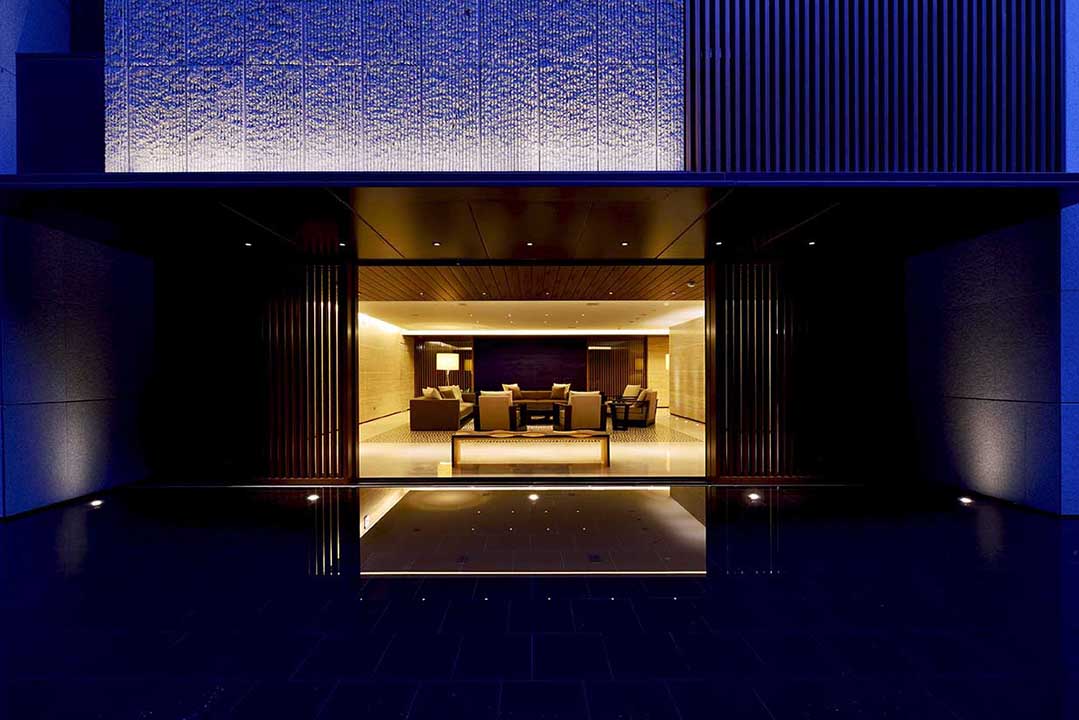
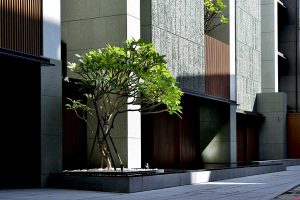
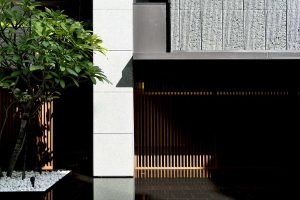
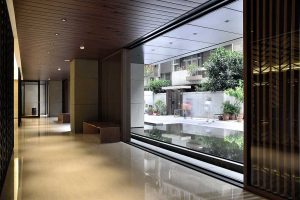
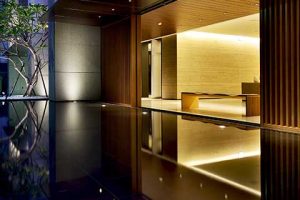
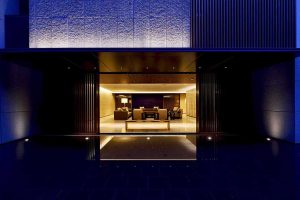
圍牆取消,帶來住宅與城市之間關係重塑的良機,新的環境價值被引入,室內和室外之間的關係可以重新編排。沿著基地邊界不再是圍牆,代之以人行鋪面、低矮水池、透明玻璃和可移動的木格柵等庭院性元素,地面層的門廳在視覺上向鄰里開放。室內外之間界線模糊,後院、門廳、水池、人行鋪面、巷道和對面住戶原有開放的前院,形成一個寬度幾達二十米的整體性空間,人們在巷道行走活動時可明顯感知到。
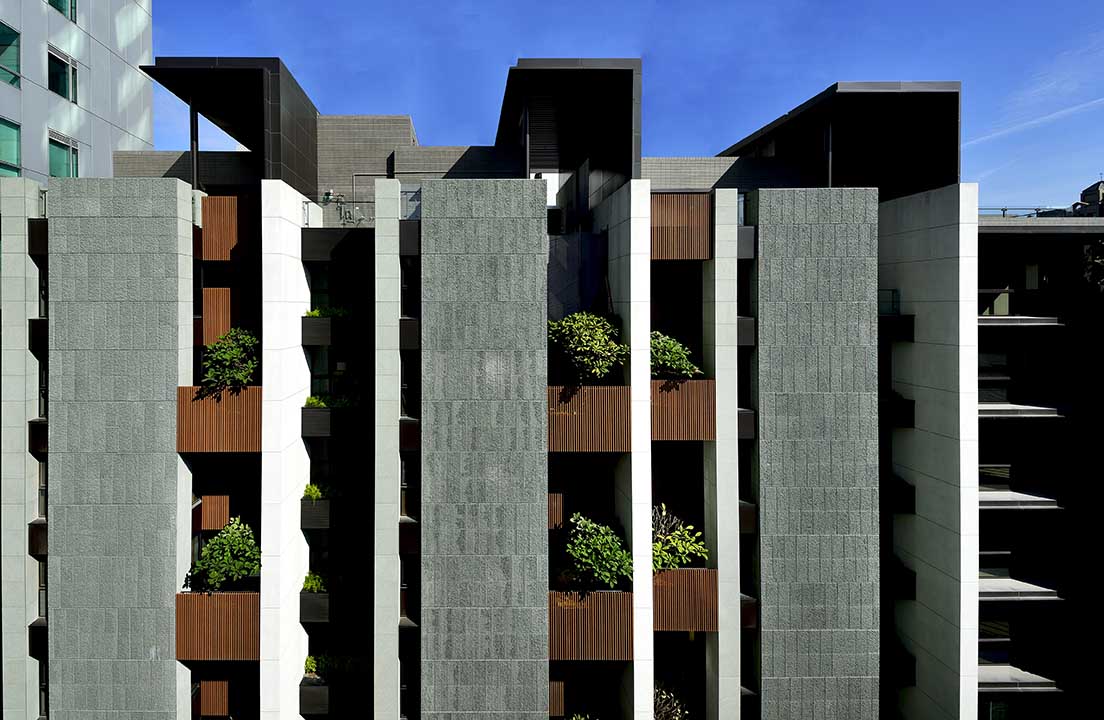
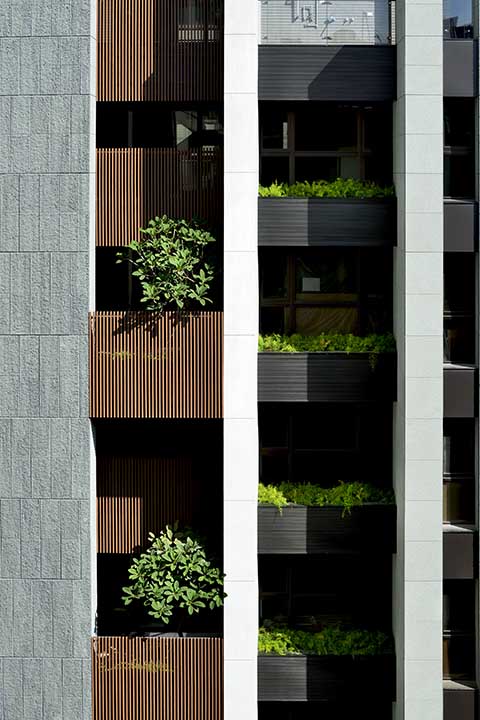
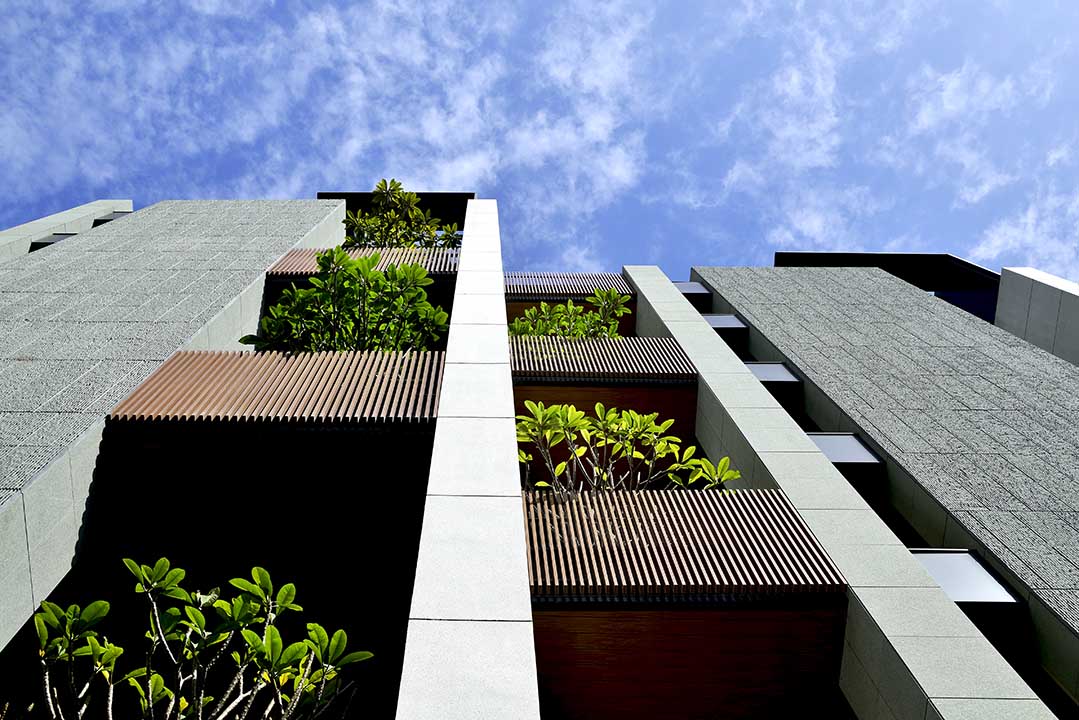
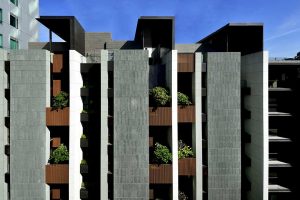
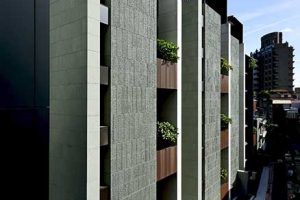
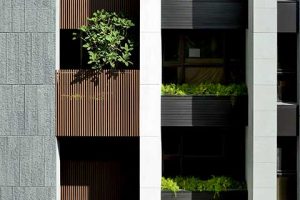
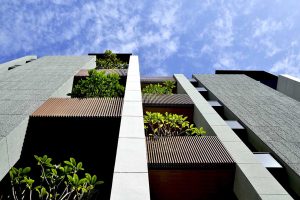
另一個努力是把雙併公寓變成獨院住宅的垂直聚落。改變單層大坪數的規劃常態,將一個住宅單元設為兩層樓之樓中樓,單元間上下相互錯開,每層的入口梯廳僅有單戶進出,也提供梯廳和住戶私人空間之間相互延續的可能。為解決窄巷中與對街鄰居距離過近的窘境,不再臨街大幅開窗,而將客廳配置在厚牆後側,深凹窗提高起居的隱私性。出了梯廳、正式進入客廳前,會行經一個挑高兩層樓的陽臺;這個安排為客廳提供充足的側向採光,也讓人們回家時,有如往昔居住於此,有穿越院子回家的空間體驗。
***
Tucked away in an alley off Section 1, Hangzhou South Road, the neighborhood is home to schools, government agencies, and former official residences. Urban change has moved at a remarkably slow pace here, and the alley has remained almost untouched by commercial activity. Turning from the hustle and bustle of Zhongxiao East Road into this narrow lane feels as if time suddenly freezes, carrying you back to the past. When developing this residence, the most important consideration was how to respond to this distinctive sense of time. The 3.8-meter-wide alley is a private lane, rarely entered by cars, and has naturally become a quiet playground for nearby children. From inside the house, one can feel the stillness just outside. In such an environment, enclosing the property with a wall seemed unnecessary.
The removal of the wall created an opportunity to reshape the relationship between the residence and the city. New environmental values were introduced, allowing the order of interior and exterior spaces to be reorganized. Along the site’s boundary, the wall was replaced by garden elements such as paved walkways, shallow pools, transparent glass, and movable wooden grilles. The ground-floor foyer visually opens to the surrounding neighborhood. The boundary between indoors and outdoors becomes blurred: the backyard, foyer, pool, paving, alley, and the open front yard of the house across the street together form a continuous space nearly 20 meters wide. Pedestrians walking through the alley can clearly perceive this sense of spatial connection.
Another strategy we adopted was to transform the duplex apartment units into a vertical cluster of courtyard houses. Breaking away from the conventional single-floor, large-footprint layout, each housing unit was reconfigured as a two-story maisonette, with units staggered vertically. Each floor’s stair landing serves only one household, creating a semi-private threshold and allowing a spatial continuity between the landing and the resident’s living area. To address the challenge of the narrow alley and the proximity to neighboring buildings across the street, we minimized large street-facing openings. Instead, the living rooms were set back behind thick walls, with deeply recessed windows that enhance privacy. Before stepping into the living room from the stair landing, one passes through a double-height balcony. This transitional space not only brings generous side lighting to the living room but also recreates the experience of crossing a courtyard on the way home, echoing the memory of traditional dwelling patterns once familiar in the neighborhood.